Transfer students, especially those entering the sciences, can often feel as though they have arrived late to the party when they begin at a four-year institution. Many of the activities that help define the campus experience for STEM students may already be underway for peers who entered directly as first-year students. While building peer networks is a challenge for many undergraduates, it can be especially difficult for transfer students because they often miss the early socialization experiences. This sense of isolation, or of “being behind,” can contribute to transfer shock and slow students’ momentum toward a degree.
Students may experience similar isolation before transfer while attending community college. Many community college students work full time, have caregiving responsibilities, or commute long distances to campus. As a result, they may have fewer opportunities to form academic support networks and develop help-seeking relationships. These relationships matter. As Jan Nespor describes (1994), undergraduates in STEM spend significant time in their early coursework socializing to their fields’ logic of collaboration.
Because of this, we built Bio Scholars to intentionally create the connections that CC and transfer students often must seek out on their own. Bio Scholars is a cohort-based mentoring program supported by the National Science Foundation’s Scholarships in STEM program (S-STEM). At Evergreen Valley College (EVC), we wanted to help students prepare for transfer while also supporting them in forming meaningful social and academic relationships during their time as community college students.
What is Bio Scholars?
Bio Scholars has three key components: a transfer preparation course, monthly group mentoring meetings with a faculty mentor, and career exploration activities. Students are expected to participate for up to two years, with the goal of transferring to a four-year institution to pursue a bachelor’s degree in biology or a life-science-related field. To date, four cohorts of students have enrolled in the program.
Transfer Success Course
Bio Scholars enroll in a transfer preparation course designed specifically for biology students, with an emphasis on career exploration and aspiration development. In the course, students participate in community-building activities, connect with campus support staff, administrators, and faculty, and learn about academic and professional networking. Guest speakers regularly visit the course to share their career journeys. A portion of the course is also devoted to preparing students for college-level lab courses and making visible the “hidden curriculum” of higher education.
Faculty Mentoring
Students accepted into the NSF Bio Scholars program participate in monthly mentoring meetings led by a faculty member. These meetings are held in small groups of five to eight students and one faculty mentor. They include time for community building, discussion of relevant topics—such as office hours, internship applications, interview skills, or transfer planning—and Bio Scholars program announcements.
Exploration and Aspiration Activities
Evergreen Valley College is located in San Jose, in the heart of Silicon Valley and near more than a dozen colleges and universities. Bio Scholars field trips include attending local conferences, visiting industry research laboratories, and touring regional transfer universities. Guest speakers working in field biology, biotechnology startups, and biomedical research help students explore a wide variety of career pathways. These experiences also help students imagine themselves in future scientific spaces.
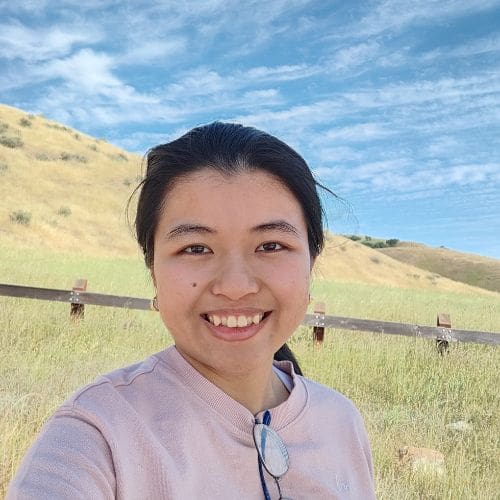
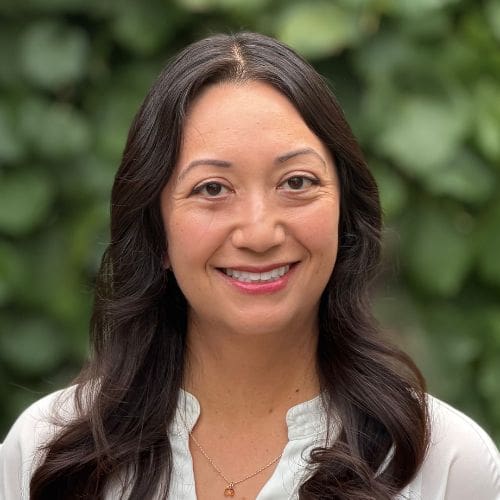
For recent Bio Scholar Nhi Do, the program helped make biology careers more visible, transfer feel more navigable, and research opportunities more attainable.
“As a part of Bio Scholars, I took a class called Bio 14, which introduced me to so many possible careers in the field of biology. There were careers that I had never heard of or even thought would be a possibility as a biology major.”
The program’s field trips also helped Nhi imagine herself as a future scientist. “As part of the program, we took part in field trips to many universities and were able to tour the research labs, which made me even more excited about being a biologist and future researcher.”
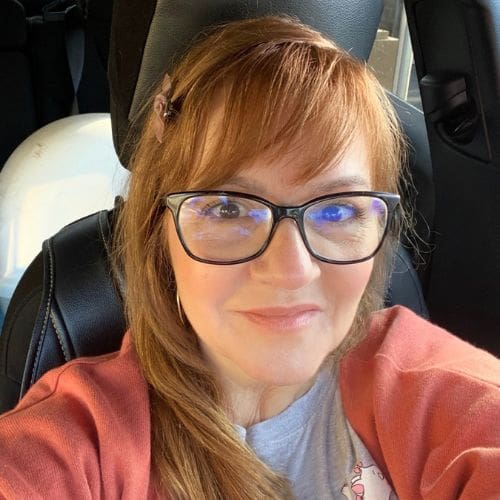
For students exploring transfer pathways, Bio Scholars offers more than information — it helps them make informed, confident decisions. As Paula, a recent Bio Scholars student reflected, the program “helped me narrow my choices, better understand what each institution had to offer, and focus on the opportunities that were the best fit for me.”
“My mentors and fellow scholars in my program were incredibly kind and helpful whenever I had questions, troubles, and even setbacks, such as class registration difficulties. I really believe the community of students, past graduates of the program, and the faculty were all of the reasons why I consider myself a successful transfer.”
“It was through this network that I was able to land my very first undergraduate research internship and be accepted to attend one of the most sought-after universities.”
Klaudia Krawczyk, another Bio Scholars participant, described the program as central to developing her identity as a scientist. “The biggest impact the program has had is helping me develop an identity as a scientist,” she reflected.
“Not only have I gained confidence in my skills and aspirations, but I was given the platform to prove that through presenting my own research poster at the NSF S-STEM annual meeting in Chicago back in 2024.”
Her experience also shows how the program’s impact can extend beyond transfer. After moving from what she described as a close-knit community college “that felt like home” to a much larger four-year institution, Klaudia drew on what she had learned in Bio Scholars to seek out similar support programs at UC Berkeley. Her advice to other students is direct: “Never give up and stop seeking help. If you feel lonely—seek community. If you feel lost—seek advice.”
How Bio Scholars Supports Academic Success and Transfer
Bio Scholars is built on two key concepts. First, the program draws on research showing that social and academic relationships are important to students’ persistence in STEM, particularly for students who must actively navigate complex transfer pathways. Second, the program draws on the ecological concept of keystone species. In biological ecosystems, keystone species play an essential role in maintaining the health and structure of their environment. In Bio Scholars, we have observed students becoming “keystone agents” who help their peers connect to resources, develop aspirations, and navigate transfer.
This matters because when a student with deep institutional knowledge leaves a community college environment, that knowledge often leaves with them. Institutions may not always have a mechanism for preserving students’ hard-earned learning. Bio Scholars helps retain and circulate that knowledge through mentoring, cohort structures, and inter-cohort peer connections.
Bio Scholars students benefit from:
- a cohort of peers with institutional knowledge;
- experiential learning that helps them cultivate navigational capital
- intentional efforts to build a community of learners on a commuter campus
Initial results from our program evaluation suggest that students’ aspirations have increased, time to transfer has decreased, and a thriving community of scholars is actively supporting students during and through the transfer process.
Building Community Connections in the Community College
Nhi, Klaudia, and Paula’s experiences highlight a broader lesson for STEM programs serving transfer-intending students: academic success is not only about course completion. It is also about helping students build the relationships, institutional knowledge, confidence, and sense of belonging that make transfer possible.
We see several actionable steps for programs and faculty.
Bring a Wide Range of People into Students’ Learning Environments
Inviting faculty, staff, administrators, alumni, and STEM professionals into the classroom helped students see these individuals as accessible sources of support rather than distant figures. It also helped break down assumptions students may have internalized about who they can talk to, what they can ask, and where academic and professional conversations can happen.
Create Structured Opportunities for Students to Practice Help-Seeking
Students often need more than information about resources; they need repeated opportunities to ask questions, attend office hours, introduce themselves to professionals, apply for internships, and see themselves as legitimate participants in academic and scientific spaces.
Support Student-Led Community Building Once it Begins
Bio Scholars students joined and helped grow campus organizations, took on leadership roles, and created spaces to connect outside of classes and formal program activities. Program faculty supported these efforts by sharing opportunities, encouraging students to invite peers into existing clubs and events, and using mentoring meetings to connect students across cohorts. These student-led efforts strengthened the broader campus ecosystem and helped preserve knowledge across cohorts.
Programs like Bio Scholars show that transfer preparation is not simply a checklist of courses and applications. It is a community-building process. When students develop strong peer networks, connect with mentors, explore possible futures, and share knowledge across cohorts, they are better positioned not only to transfer, but to thrive.
References
Brown, M., & Cain, C. (2026). “I Wish There Was a Way to Share”: The Changing Campus Ecologies Around Community College Life Science Courses. Community College Journal of Research and Practice, 50(2), 155-172.
Deil-Amen, R. (2011). Socio-academic integrative moments: Rethinking academic and social integration among two-year college students in career-related programs. The Journal of Higher Education, 82(1), 54-91.
Hills, J. R. (1965). Transfer shock: The academic performance of the junior college transfer. The Journal of Experimental Education, 33(3), 201-215.
Nespor, J. (1994). Knowledge in motion: Space, time and curriculum in undergraduate physics and management. Routledge.
Yosso, T. J. (2005). Whose culture has capital? A critical race theory discussion of community cultural wealth. Race ethnicity and education, 8(1), 69-91.